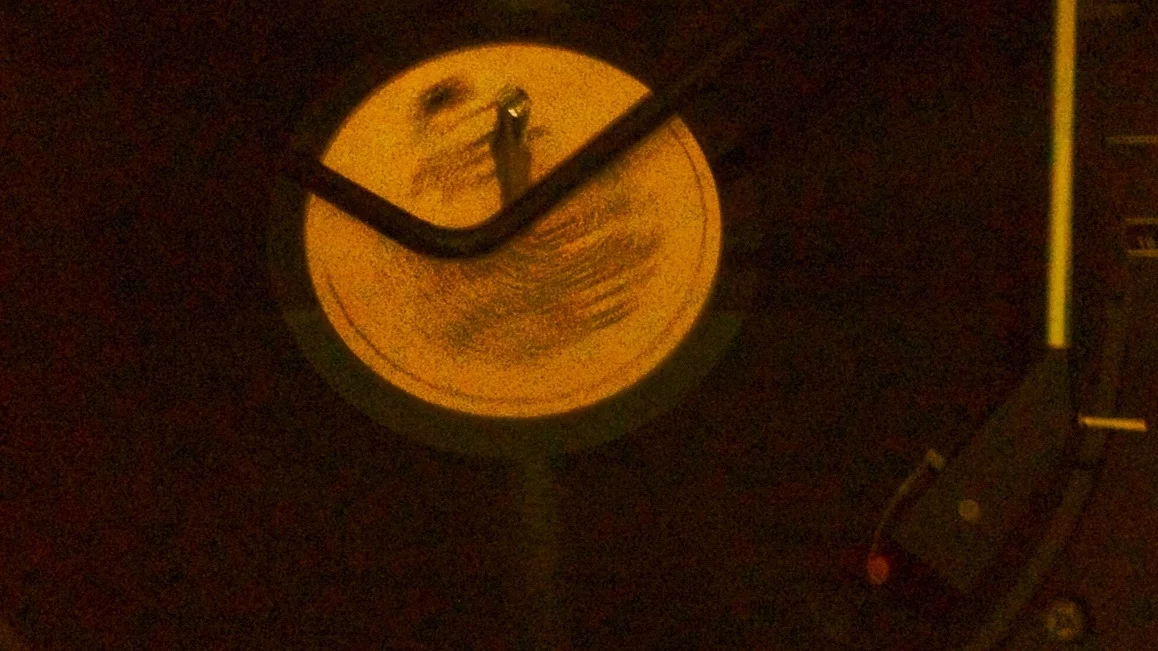
I’ve been approached by a company that makes and distributes AI-generated audiobooks. They’ve made me some test samples. Those samples are actually pretty good, and for a few hundred dollars, it’s not even that big of an ask to generate an audiobook with a rich AI cast and foley clips for about 15–17 hours of audio (Daedalus is around 162,000 words).
Given that, broadly, AI-generated works can’t be copyrighted, does that mean an AI-narrated audiobook of Daedalus would automatically become a public-domain work?
No. Not here in Australia, and not in the USA. Overall the premise that “AI-generated content isn’t copyrightable” is way too broad: the answer depends on both the jurisdiction and the actual material being protected.
I had a chat with my brother Matt Sag, who, as luck would have it, specialises in AI and copyright. He sharpened the distinction between copyright in my novel and any separate copyright in its recording. That said, any errors in the following argument are all mine. I’m not a lawyer or legal scholar, just an enthusiastic amateur with skin in the game.
Enjoying this essay? Consider subscribing for more.
There are several separate rights involved:
-
My novel remains protected by copyright. Converting my words into synthetic speech doesn’t alter my existing copyright in them. In the USA, someone copying, distributing or publicly performing the complete audiobook would still be using my protected text and would ordinarily need permission. For a novel like mine, the usual US copyright term is my life plus 70 years. Ordinary exceptions still apply, including fair use in the USA and fair dealing in Australia. US Copyright Act, s. 106, s. 302. The US Copyright Office also expressly recognises that human-authored expression remains protected when incorporated into AI output. US Copyright Office report, pp. 23–24.
-
AI-generated voice work and human production work need separate consideration. In the USA, purely machine-generated expression receives no copyright protection. Human creative contributions like editing and arrangement can qualify, depending on what people actually bring to the table. You can’t simply call something “human-led”. US Copyright Office conclusions.
-
Australia has an important distinction for audio. Sound-recording copyright falls under Part IV of the Copyright Act. Its requirements differ from those for copyright in literary, dramatic, musical and artistic works. The Law Council explains that these recordings have no originality requirement. An AI-generated recording can thus attract recording copyright in Australia even where its generated expression would not qualify as a human-authored work. The recording must still meet the regular statutory requirements, of course. Copyright Act, s. 89, Law Council analysis, paras. 63–65 and 77.
-
The UK also treats recording copyright separately. The UK government explains that sound recordings do not need to be original to receive protection, including recordings of AI-generated material. Its ownership guidance identifies the record producer as the usual first owner. UK government explanation, para. 130, UK ownership guidance.
Any protected foley clips or music incorporated into the production also retain their own separate rights.
So what does that mean for me?
In the case of a service that claims “you own the master”, the service needs to distinguish between ownership of the delivered files, assignment of whatever copyright exists, and licences for embedded third-party material. A contract can allocate existing rights, but it can’t create statutory copyright where the law provides none. The Law Council of Australia specifically makes that distinction. Contractual rights analysis, paras. 78–79.
I’ve now looked at the proposed production agreement, and it does contain a substantive assignment: after full payment, the producer assigns all its rights in the production and master recording to me, subject to stated third-party licences. There is an express fallback assignment if the recording does not qualify as a “work made for hire”. That fallback matters because the US rules for commissioned works made for hire have specific requirements; the label alone doesn’t settle ownership. US Copyright Office explanation.
There is another Australian wrinkle: under section 97(3), someone who commissions a sound recording for payment is generally its copyright owner unless the agreement says otherwise. So the production company does not necessarily own the Australian recording copyright in the first place. The service’s express assignment of rights establishes what happens to whatever rights the company does own. Copyright Act, s. 97.
The narration licence was my remaining practical question, even if I chose a version with no music or effects. The documents grant full commercial use of the narration “as embedded in the Production”, including selling and streaming the audiobook without further payment for the narration. That wording left me wanting to clarify what was assigned and what was licensed. The producer can only assign rights it actually owns.
The right to remix
Suppose I take that clean narration, load it into GarageBand on my Mac, and add my own (or copyright-free) foley and music. There is no specific ban on ordinary editing in the documents I’ve seen, and doing that seems consistent with owning the master. I wanted written confirmation that I could edit, mix and distribute my resulting edition without another approval or fee, and that the narration-only recording was included in the master assigned to me.
My own creative sound design, music, and arrangement could qualify for copyright protection in the USA, depending on what I actually contribute. That protection would cover my contributions, without turning the machine-generated elements themselves into human-authored expression. Any music or effects I license from elsewhere would still carry their own terms. US Copyright Office report, pp. 24–27.
The producer has confirmed by email that, once paid for, the master is assigned to me outright, narration included, and that I’ll receive a clean version of every chapter that I can pretty much do what I like with. I can edit the resulting files1, add my own foley and music, and publish my mix, subject to each individual audiobook store’s rules. The limits are that I can’t use the narration to train or clone a voice, and I must retain the required AI-narration disclosures and producer credit in the metadata.
To sum up
Using an AI service to create an audiobook version of my novel does not dilute my copyright in any way. While there are jurisdictional differences in terms of what underlying copyrights exist, the bottom line is that the resulting audio tracks become mine once I pay for them. The agreement allocates rights between us. Australian law protects any recording copyright assigned to me. My underlying novel remains protected either way.
The final question is not a legal one but an aesthetic one. Is seventeen hours of AI-generated voices something I’d actually want to listen to2.
Cheers, Dave
If you liked this essay, consider subscribing for more.
Links
- Matt Sag’s Copyright Law in the Age of AI.
- US Copyright Act: exclusive rights (s. 106) and duration (s. 302).
- US Copyright Office: Copyright and Artificial Intelligence, Part 2 (PDF) — executive summary and pp. 23–27.
- Australian Copyright Act 1968 — ss. 89 and 97.
- Law Council of Australia: Copyright and artificial intelligence (PDF) — paras. 63–65 and 77–79.
- UK government: Copyright and Artificial Intelligence — para. 130.
- UK Intellectual Property Office: Ownership of copyright works.
- US Copyright Office: Works Made for Hire (PDF).